

Hyaluronic Acid Raw Material Market Surges Toward USD 12.33 Billion by 2035 as Aesthetic Medicine, Pharma Innovation, and AI-Driven Manufacturing Accelerate Global Demand
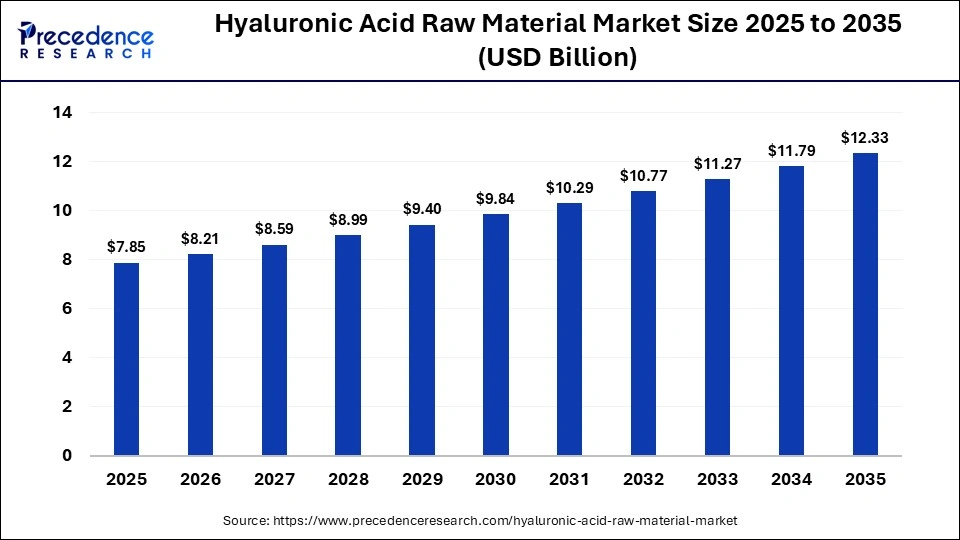
The global hyaluronic acid raw material market is entering a transformative growth phase as pharmaceutical manufacturers, biotechnology innovators, and cosmetic brands increasingly rely on hyaluronic acid (HA) for advanced therapeutic and aesthetic applications. According to recent industry analysis, the market size was valued at USD 7.85 billion in 2025 and is projected to rise from USD 8.21 billion in 2026 to nearly USD 12.33 billion by 2035, expanding at a CAGR of 4.62% during the forecast period from 2026 to 2035.
The growing demand for minimally invasive cosmetic procedures, rising use of HA in ophthalmic and orthopedic treatments, and increasing consumer awareness regarding premium skincare ingredients are significantly contributing to market expansion. In parallel, biotechnology-based manufacturing techniques and AI-powered production optimization are reshaping the industry’s supply chain and operational efficiency.
The pharmaceutical industry remains one of the largest consumers of hyaluronic acid raw materials due to their growing use in injectable drugs, wound healing therapies, ophthalmic products, and viscosupplements. At the same time, beauty and personal care brands are aggressively investing in anti-aging skincare solutions, creating robust commercial opportunities for HA suppliers worldwide.
Hyaluronic Acid Raw Material Market Key Points
- The global hyaluronic acid raw material market reached USD 7.85 billion in 2025 and is expected to hit USD 12.33 billion by 2035, driven by increasing pharmaceutical and cosmetic applications worldwide.
- North America dominated the global market in 2025 by accounting for 34% of total revenue, supported by strong pharmaceutical infrastructure and rising aesthetic treatment demand.
- Asia Pacific is projected to witness the fastest growth rate through 2035 due to expanding biotechnology investments and growing injectable filler adoption in China, India, Japan, and South Korea.
- The high molecular weight segment emerged as the leading product category in 2025 because of its extensive use in skincare and dermatological products.
- Biotechnology-based production dominated the source segment as manufacturers increasingly prefer microbial fermentation methods for producing high-purity, non-animal-derived HA.
- Pharmaceuticals remained the largest application segment in 2025 owing to increasing utilization in ophthalmology, orthopedics, and injectable therapies.
- Injectable fillers are anticipated to witness the fastest growth among end-use categories due to the rapid rise in non-surgical cosmetic procedures globally.
Hyaluronic Acid Raw Material Market Snapshot: Revenue Outlook and Growth Forecast
| Market Indicator | Value |
|---|---|
| Market Size in 2025 | USD 7.85 Billion |
| Estimated Market Size in 2026 | USD 8.21 Billion |
| Forecast Market Size by 2035 | USD 12.33 Billion |
| CAGR (2026–2035) | 4.62% |
| Dominant Region | North America |
| Fastest Growing Region | Asia Pacific |
Why is Hyaluronic Acid Becoming a Strategic Raw Material Across Industries?
Hyaluronic acid has evolved from being a niche cosmetic ingredient into a multifunctional biomaterial utilized across pharmaceuticals, healthcare, nutraceuticals, orthopedics, ophthalmology, and regenerative medicine. Its exceptional water retention capability, biocompatibility, lubrication properties, and skin hydration benefits make it one of the most commercially valuable ingredients in the life sciences sector.
Healthcare providers are increasingly using HA in viscosupplement injections for osteoarthritis management, post-surgical wound care, and ophthalmic treatments. Simultaneously, cosmetic manufacturers are incorporating high-purity HA into serums, creams, masks, and injectable fillers to cater to rising global beauty consciousness.
The increasing aging population globally is further intensifying demand for anti-aging and skin rejuvenation treatments. Consumers are shifting toward science-backed skincare products with clinically validated ingredients, which continues to elevate the commercial importance of hyaluronic acid raw materials.
How is Artificial Intelligence Reshaping the Hyaluronic Acid Raw Material Industry?
Artificial intelligence is emerging as a transformative force across the hyaluronic acid value chain, especially in biotechnology-driven production facilities. AI-powered analytics are helping manufacturers optimize fermentation processes, improve yield consistency, and maintain pharmaceutical-grade purity standards. Real-time monitoring systems are also enhancing operational efficiency and minimizing production variability.
In the pharmaceutical sector, AI technologies are accelerating drug discovery, streamlining clinical trial workflows, and improving supply chain visibility for HA-based therapeutic products. Cosmetic companies are also deploying AI-driven formulation systems to develop personalized skincare products and rapidly identify consumer trends.
The integration of AI with biofermentation technology is expected to significantly improve scalability and cost-efficiency while enabling sustainable and high-precision manufacturing practices over the next decade.
What are the Major Growth Drivers Transforming the Market?
Rising Demand for Injectable Fillers and Aesthetic Procedures
The rapid increase in minimally invasive cosmetic treatments worldwide is one of the strongest market growth catalysts. HA-based dermal fillers are extensively used for wrinkle reduction, facial contouring, scar treatment, and volume restoration due to their safety profile and reversible nature.
Growing beauty awareness among millennials and aging populations alike is increasing global acceptance of injectable aesthetics, particularly across the U.S., China, South Korea, Brazil, and the UAE.
Expansion of Pharmaceutical Applications
Pharmaceutical manufacturers are increasingly utilizing hyaluronic acid in ophthalmic solutions, wound healing products, orthopedic therapies, and drug delivery systems. HA’s excellent biocompatibility and therapeutic properties continue to strengthen its adoption in advanced medical formulations.
Rapid Growth of Premium Skincare Products
The skincare industry is witnessing strong demand for premium hydration and anti-aging solutions. Consumers are actively seeking scientifically validated skincare ingredients, positioning hyaluronic acid as a preferred component in modern cosmetic formulations.
Government Investments in Healthcare and Biotechnology
Governments across the U.S., China, India, and Germany are investing heavily in pharmaceutical manufacturing and biotechnology infrastructure. Such investments are encouraging production expansion and accelerating innovation within the HA raw material ecosystem.
Hyaluronic Acid Raw Material Market Segment Analysis
Type Analysis
The high molecular weight segment held the largest market share in 2025 due to its extensive use in the cosmetics industry. These hyaluronic acids are widely utilized in skincare products because they help reduce irritation, protect the skin barrier, and provide deep surface hydration. Growing demand from the healthcare sector and the increasing aging population also contributed to the segment’s dominance.
The low molecular weight segment is projected to grow at the fastest CAGR from 2026 to 2035. Its rising adoption in the pharmaceutical industry for products such as eye drops and viscosupplements is driving growth. These hyaluronic acids are preferred for their deeper skin penetration, wound-healing abilities, and anti-inflammatory benefits.
Source Analysis
The biotechnology segment dominated the market in 2025 because it enables the production of high-purity and non-animal-derived hyaluronic acid through microbial fermentation. This method provides better molecular weight control, improved scalability, and reduced contamination risks compared to animal extraction methods. The growing demand for medical-grade and injectable hyaluronic acid further strengthened the segment.
The animal extracts segment is expected to witness the highest CAGR during the forecast period. Animal-derived hyaluronic acid remains popular in orthopedic and pharmaceutical applications due to its proven clinical effectiveness and natural biocompatibility. Increasing use in supplements and pharmaceutical products is also supporting segment growth.
Application Analysis
The pharmaceuticals segment accounted for the largest revenue share in 2025. Hyaluronic acid is widely used in injectable drugs, ophthalmic products, and viscosupplement therapies because of its safety, therapeutic effectiveness, and biocompatibility. Collaborations between pharmaceutical and biotechnology companies are further boosting segment expansion.
The cosmetics segment is expected to grow at the fastest rate from 2025 to 2035. Rising demand for anti-aging products and skin conditioners is driving the adoption of hyaluronic acid in cosmetic formulations. Investments in new cosmetic manufacturing facilities and increasing demand for aesthetic medicine are also contributing to growth.
End Use Analysis
The skincare products segment dominated the market in 2025 due to rising consumer demand for premium skincare products across countries such as China, the U.S., the UAE, and the UK. Hyaluronic acid is commonly used in creams, serums, and masks to improve hydration, elasticity, and skin smoothness. Growing awareness of skincare ingredients and demand for science-backed products supported the segment’s leadership.
The injectable fillers segment is expected to grow at the highest CAGR during the forecast period. Increasing use of dermal fillers for wrinkle reduction, scar treatment, and facial contouring is fueling demand. Rising beauty consciousness, a growing aging population, and the popularity of non-surgical cosmetic treatments are driving segment growth.
Hyaluronic Acid Raw Material Market Regional Analysis
What Made North America the Dominant Region?
North America dominated the hyaluronic acid raw material market in 2025 due to strong demand from the pharmaceutical and cosmetic industries across the U.S., Canada, and Mexico. Expanding manufacturing facilities and government initiatives supporting the pharmaceutical sector also contributed to regional growth. The presence of major companies such as Allergan, Revance Therapeutics, and Suneva Medical further strengthened the market.
U.S. Market Analysis
The U.S. market is expanding because of increasing demand for hyaluronic acid in injectables, wound care, and skincare products. The growing aging population and preference for minimally invasive aesthetic procedures are boosting the use of dermal fillers and therapeutic formulations.
Why is Asia Pacific Emerging as a High-Growth Region?
Asia Pacific is expected to grow at a significant CAGR from 2025 to 2035. Rising sales of injectable fillers in countries such as India, China, Japan, and South Korea are driving regional growth. Government investments in biotechnology and pharmaceutical industries, along with technological advancements, are further supporting the market.
China Market Trends
China’s market is witnessing strong growth due to rising demand from the cosmetics, healthcare, and pharmaceutical sectors. Growing awareness of anti-aging skincare products and minimally invasive aesthetic procedures is increasing the adoption of HA-based fillers and topical products.
Companies such as Bloomage Biotech, Freda Biotechnology, LG Chem, and Kewpie Corporation are supporting market expansion in the region.
Europe Insights
Europe is expected to witness significant growth due to increasing investments in R&D and advanced production technologies. Demand for pharmaceutical-grade hyaluronic acid in dermatology and orthopedic applications is driving innovation in the region.
Germany is increasingly adopting microbial fermentation over animal-derived production methods. Companies are focusing on sustainable and sterile fermentation technologies while strengthening local sourcing to ensure stable raw material supplies.
Latin America Insights
Latin America is projected to experience notable growth during the forecast period. Brazil remains a key market because of its high demand for aesthetic procedures and anti-aging treatments. Growing regulatory focus on product safety is also increasing demand for high-purity and non-animal-derived hyaluronic acid.
Brazil is seeing higher investments in fermented and high-purity raw materials to improve the safety and effectiveness of medical-grade products. Manufacturers are also emphasizing transparency and quality compliance to meet tightening regulations.
Middle East & Africa Insights
The Middle East and Africa market is expected to grow steadily due to increasing demand for non-surgical aesthetic treatments such as dermal fillers and skin hydration therapies. Rising focus on sustainable and compliant hyaluronic acid products is also supporting market growth.
The UAE market is benefiting from the expansion of the cosmetic and wellness industries in Dubai and Abu Dhabi. Demand for vegan-grade and non-animal hyaluronic acid is increasing, while manufacturers are adopting advanced biofermentation technologies to ensure higher purity and safety.
Expert Perspective from Precedence Research
“Global demand for hyaluronic acid raw materials is no longer confined to skincare applications alone. The convergence of biotechnology innovation, regenerative medicine, pharmaceutical advancements, and aesthetic medicine is fundamentally reshaping the industry’s future. Companies that invest in sustainable manufacturing, AI-driven process optimization, and premium-grade formulations will likely gain significant competitive advantages over the next decade,”
Major Companies Operating in the Hyaluronic Acid Raw Material Market
Bloomage Biotech
Bloomage (China) positions itself as a full‑chain HA‑focused biotech, supplying over 200 HA specifications via microbial fermentation.
Pharmaceutical‑grade HA (API and excipient) for injectables, ophthalmology, and dermal fillers.
Cosmetic‑grade HA (including nano‑ and ultra‑low‑MW fractions) for serums, masks, and dermocosmetics.
Food‑grade HA for oral supplements and functional‑food formulations, marketed globally.
Seikagaku Corporation
Seikagaku (Japan) focuses on high‑purity, ophthalmic‑ and orthopedic‑grade HA for regulated medical applications.
Fermentation‑derived HA raw material for intra‑articular injections (osteoarthritis) and ophthalmic viscoelastic devices.
Cosmetic‑grade HA for high‑end skincare formulations, emphasizing stability and low endotoxin.
Fidia Farmaceutici S.p.A.
Fidia (Italy) is a leading European player in high‑purity, fermentation‑derived HA and derivatives for pharma and medical devices.
APIs and excipients for joint‑ and ophthalmic injections, viscoelastic devices, and adhesion‑barrier products.
Specialty HA derivatives (crosslinked, esterified, etc.) for controlled‑release and device‑formulation applications.
Lifecore Biomedical, Inc.
Lifecore (US) supplies GMP‑manufactured, pharmaceutical‑grade HA for injectables and drug‑delivery systems.
HA raw material for surgical, ophthalmic, and orthopedic applications (viscosurgical devices, intra‑articular injections).
HA‑based solutions and gels for proprietary drug‑delivery systems and medical‑device partners.
Shandong Focuschem / FocusFreda Biotech
Shandong Focuschem (now operating under FocusFreda) markets HA under multiple brands across grades.
Cosmetic‑grade HA: Hyaskin®, Hyaoligo®, HA Pro® (low‑MW fractions, 400 Da to ~10,000 Da) for serums, masks, and toners.
Food‑grade HA: Hyafood® and related formulations for oral health and beauty‑supplement products.
Pharmaceutical‑grade HA: Medical‑device‑grade sodium hyaluronate for eye‑drop and injection‑grade formulations.
Shandong Freda Biopharm Co., Ltd.
Freda Biopharm is primarily known for antimicrobial peptides and polysaccharides; its direct HA presence is smaller than Focuschem‑brand players.
Entry‑level or niche HA‑related cosmetic and functional‑ingredient offerings rather than broad HA‑API portfolio.
Focus remains on other biopolymers (nisin, natamycin, poly‑γ‑glutamic acid), with HA positioned as a complementary raw material.
Shandong Topscience Biotech Co., Ltd.
Topscience Biotech focuses on pharma‑grade sodium hyaluronate APIs via microbial fermentation.
Injection‑grade and eye‑drop‑grade HA APIs with GMP/API‑license status, targeting global pharma and medical‑device customers.
Wide MW range (high, medium, low) for joint‑ and ophthalmic applications, plus HA for cosmetic‑grade formulations.
HTL Biotechnology
HTL (France) is positioned as a leading European manufacturer of fermentation‑derived pharmaceutical‑grade HA.
High‑purity sodium hyaluronate for medical‑device and injectable products (orthopedic, ophthalmic, and dermal‑filler base materials).
Broad portfolio of molecular‑weight grades and flexible supply for device‑formulation partners worldwide.
Contipro a.s.
Contipro (Czech Republic) is a major HA producer using bacterial fermentation (Streptococcus zooepidemicus).
HA raw material for pharmaceutical and medical‑device applications (viscoelastic ophthalmic agents, joint injections, wound‑care, and adhesion barriers).
Cosmetic‑grade HA ingredients for anti‑aging and hydrating skincare, marketed to global brands and formulators.
Kewpie Corporation
Kewpie (Japan) is a top‑tier sodium hyaluronate API manufacturer in Japan, with strong pharma orientation.
Pharmaceutical‑grade sodium hyaluronate (powder API) for knee‑injectables, dry‑eye eye‑drops, dermal fillers, and ophthalmic viscoelastic devices.
Injectable and excipient HA grades tailored for crosslinked gels, submucosal injections, adhesion barriers, and advanced drug‑delivery systems.
Latest Industry Developments
- In November 2025, Meditherapy launched a hyaluronic acid skin booster serum utilizing multi-layering hydration technology.
- In April 2025, Givaudan introduced PrimalHyal UltraReverse, a sustainable hyaluronic acid solution for cosmetic applications.
- In February 2025, Evolus, Inc. announced FDA approval for Evolyss smooth injectable hyaluronic acid gels.
- In November 2025, Young Innovations partnered with Umayana to launch Murnia, a hyaluronic acid-based mouth spray in the U.S.Segments Covered in the Report
By Type
- High Molecular Weight
- Low Molecular Weight
- Medium Molecular Weight
By Source
- Biotechnology
- Animal Extracts
- Synthetic
By Application
- Pharmaceuticals
- Cosmetics
- Food & Beverages
- Dietary Supplements
By End Use
- Skincare Products
- Injectable Fillers
- Ophthalmic Products
By Region
- North America
- Europe
- Asia-Pacific
- Latin America
- Middle East & Africa
Read Also: Povidone Iodine Market Size to Surpass USD 2.59 Billion by 2035
Get this report to explore global market size, share, CAGR, and trends, featuring detailed segmental analysis and an insightful competitive landscape overview @ https://www.precedenceresearch.com/sample/7466
You can place an order or ask any questions. Please feel free to contact us at sales@precedenceresearch.com |+1 804 441 9344
